How to Build a Daily Exercise Habit in 2026
Struggling to stay consistent with workouts? Learn the psychology of habit formation and practical strategies to build an exercise routine that sticks.

You told yourself you'd start working out regularly. Maybe you bought new running shoes, downloaded a fitness app, or signed up for a gym membership. Two weeks later, the shoes are gathering dust and the app keeps sending notifications you swipe away. Sound familiar? You're not broken — you're just fighting your own biology. The good news: once you understand how habits actually form, building a daily exercise routine becomes a lot less mysterious.
Key Takeaways
- Start with a "stupidly small" commitment — even two minutes counts — to bypass your brain's resistance to new behaviors.
- Attach your workout to an existing daily routine (habit stacking) so it becomes automatic rather than a decision.
- Design your environment to make exercise the easiest option — lay out gym clothes, keep equipment visible, remove friction.
- Focus on showing up consistently rather than hitting performance targets; identity drives lasting habits.
- Track your streak and never miss twice in a row — momentum matters more than perfection.
Why Your Brain Resists Exercise
Here's something counterintuitive: humans didn't evolve to exercise. In Exercised, Harvard evolutionary biologist Daniel Lieberman explains that our ancestors never "worked out" — they moved because survival demanded it. Chasing food, fleeing danger, migrating to new territory. When there was no immediate reason to move, resting was the smart play. Your body still runs that ancient software.
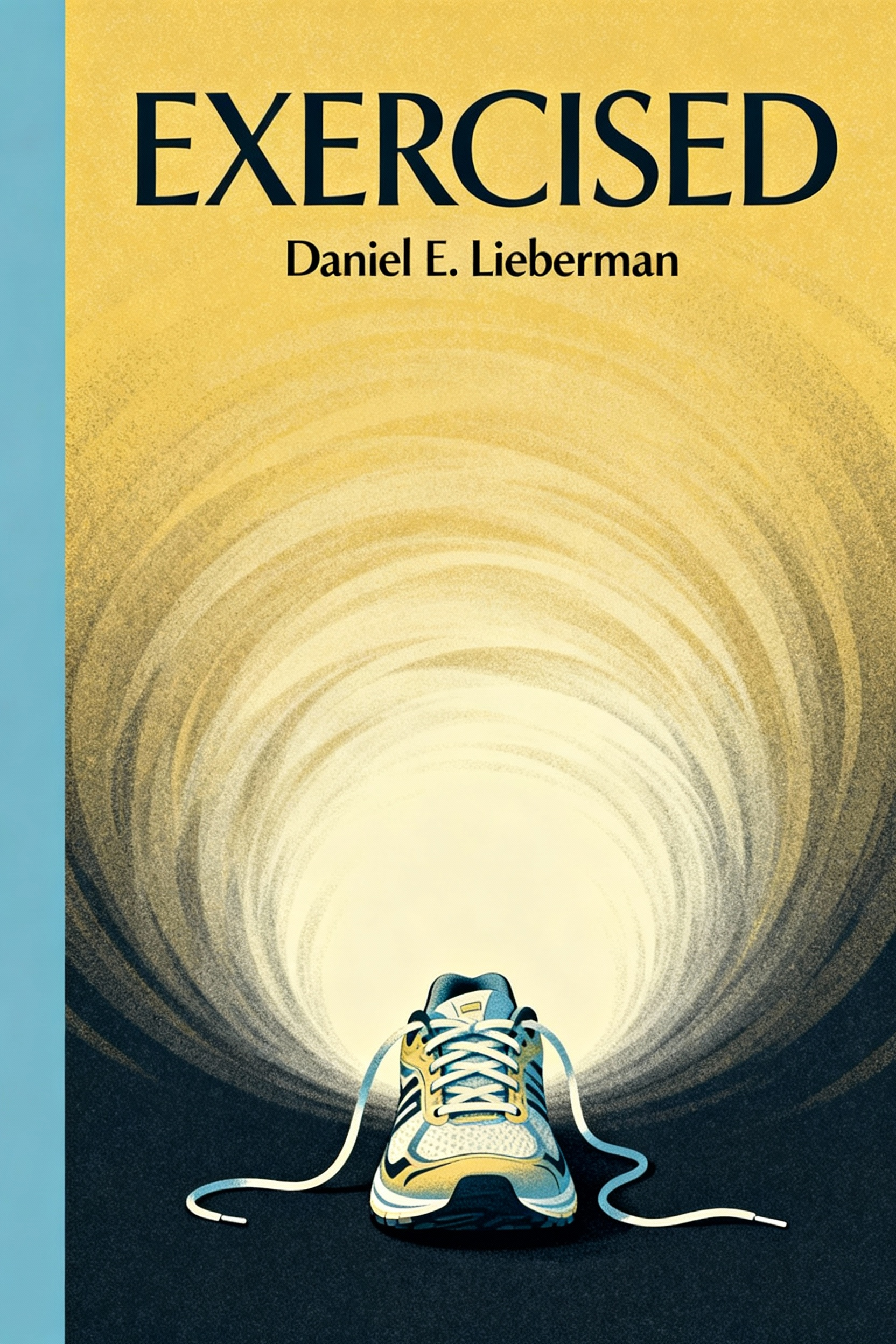
That means the voice telling you to skip today's workout isn't laziness — it's a deeply wired instinct to conserve energy. Lieberman's research shows that motivation through guilt rarely works because it fights evolution. Compassion and clever system design work far better. The trick isn't to overpower your biology; it's to outsmart it.
The Habit Loop: Cue, Routine, Reward
Charles Duhigg's The Power of Habit breaks down every habit into three components: a cue that triggers the behavior, the routine itself, and a reward that reinforces it. For exercise, this might look like: your alarm goes off at 6:30 AM (cue), you do a 20-minute run (routine), and you enjoy a hot shower and a smoothie afterward (reward).
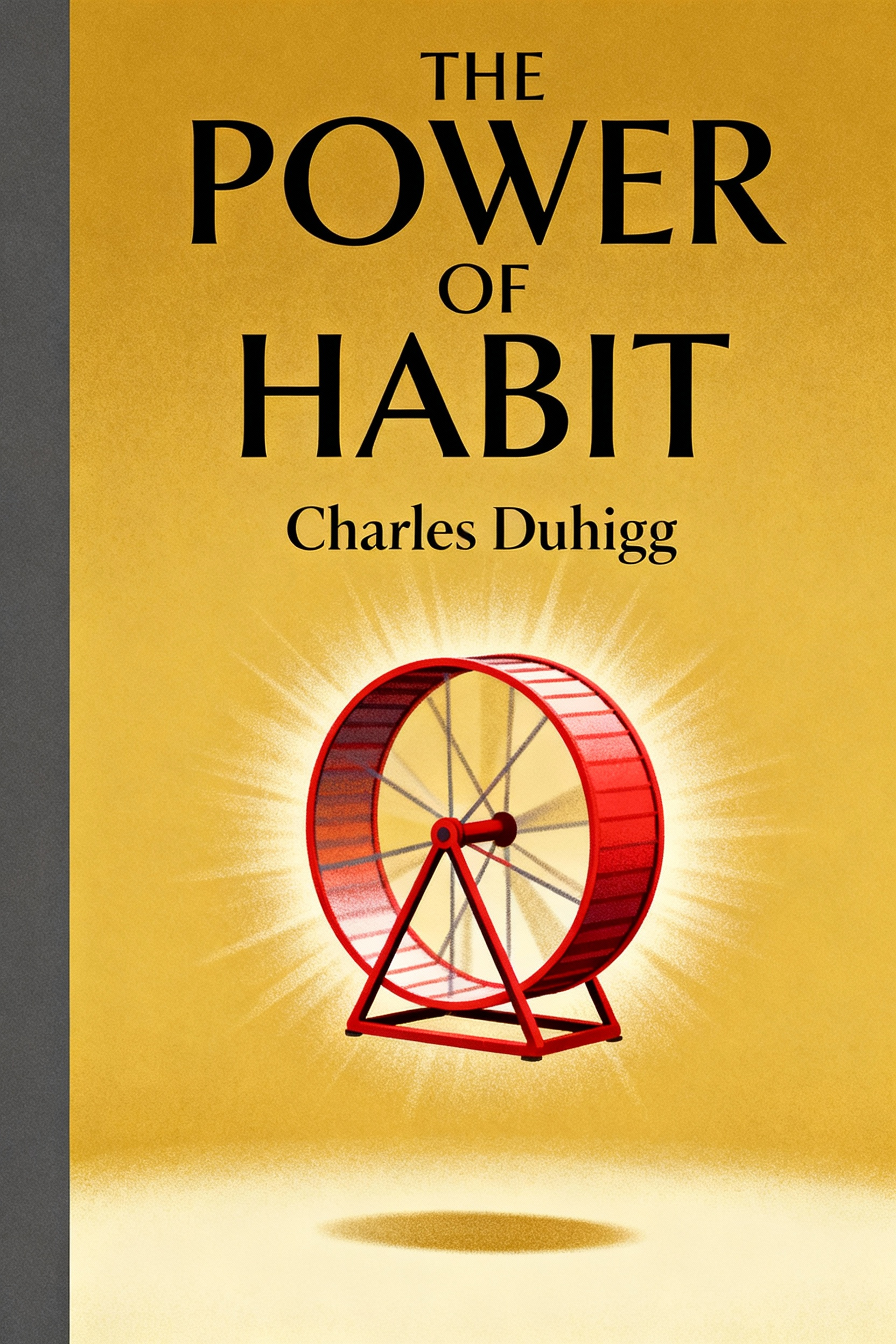
Duhigg's key insight is that you can't just delete a bad habit — you have to replace the routine while keeping the cue and reward intact. If your after-work cue currently leads to collapsing on the couch (reward: stress relief), swap the routine for a 15-minute walk that still delivers that stress relief. The loop stays intact, but the behavior changes. He also identifies exercise as a "keystone habit" — one that triggers positive cascading effects across your entire life, from better sleep to improved eating to higher productivity.
Make It Obvious and Attractive
James Clear builds on this framework in Atomic Habits with four laws of behavior change. The first two — make it obvious and make it attractive — are about setting yourself up before willpower even enters the picture. Clear recommends "implementation intentions": instead of "I'll exercise more," write down "I will do a 15-minute bodyweight workout in my living room at 7:00 AM before my morning coffee." Specificity removes the decision fatigue that kills most exercise plans.
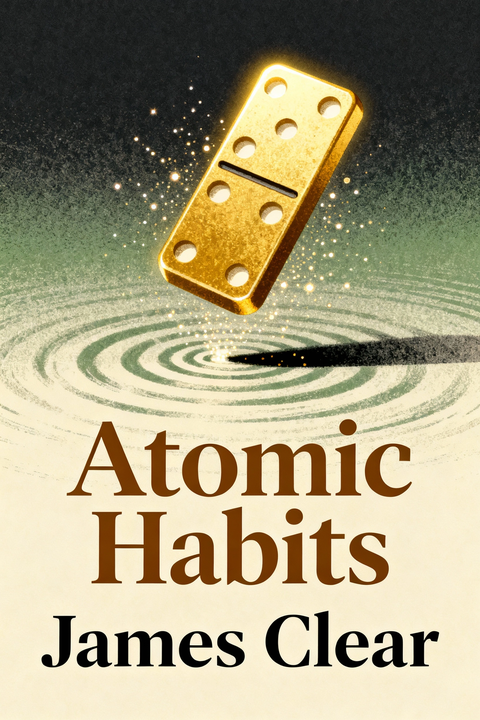
Pair the workout with something you enjoy — a favorite playlist, a podcast episode you've been saving, or a workout buddy who makes the time fly. Clear calls this "temptation bundling," and it transforms exercise from something you endure into something you look forward to.
Make It Easy and Satisfying
Clear's third and fourth laws are where most people get the real breakthrough. Make it easy means reducing friction to the absolute minimum. Sleep in your workout clothes. Keep your yoga mat unrolled. Set up a home station so you don't need to commute to a gym. The fewer steps between you and the workout, the more likely you are to do it.
Make it satisfying is about immediate rewards. Your brain discounts future benefits (looking great in six months) in favor of present comfort (the couch, right now). So give yourself something immediately rewarding after each session — mark an X on a wall calendar, log it in an app, or enjoy a guilt-free treat. That visual streak becomes surprisingly powerful motivation.
Start Embarrassingly Small
Stephen Guise makes a compelling case in Mini Habits that the biggest reason people fail at exercise isn't lack of motivation — it's that they set the bar too high. His solution: commit to something so small it feels almost ridiculous. One push-up. A two-minute walk. Thirty seconds of stretching.
The psychology behind this is solid. When a task is tiny, your brain doesn't trigger the resistance response that comes with "go run five miles." You just do it. And once you've started, you usually do more than the minimum — Guise calls this "bonus reps." The real goal isn't the push-up itself; it's training your brain to associate exercise with something easy and achievable, day after day, until it becomes automatic.
For a quick audio deep-dive into the science of making fitness stick, listen to Make Exercise Automatic: Science-Backed Consistency Secrets — it covers the 66-day rule, environmental design, and how to make workouts genuinely fun.
Overcoming the Most Common Obstacles
"I Don't Have Time"
You don't need an hour. Research from Lieberman's work shows that short bursts of movement — what he calls "movement snacks" — can be just as beneficial as longer sessions. Ten minutes of bodyweight exercises before your shower. A brisk walk during lunch. Three sets of squats between meetings. Stack these throughout your day and you've built a meaningful exercise habit without blocking off a single calendar slot.
"I Lost My Streak and Now I Feel Like Starting Over"
Clear's most practical rule: never miss twice. Missing one day is normal. Missing two days is the start of a new (bad) habit. When you skip a session, the only thing that matters is what you do next. Show up the following day, even if it's just for five minutes. Protect the streak, not the intensity.
"I Get Bored With the Same Routine"
Rotate your activities. Monday is a run, Wednesday is yoga, Friday is strength training. Your brain craves novelty, and variety prevents both physical plateaus and mental burnout. The habit you're building is daily movement — the specific form can change as often as you like.
How BeFreed Can Help
Building an exercise habit is as much a mental game as a physical one. BeFreed's AI-powered podcasts can help you absorb key insights from books like Atomic Habits, The Power of Habit, and Exercised — during your warm-up, cool-down, or morning commute. Choose 10, 20, or 40-minute episodes tailored to your pace. You can also explore The Science of Building Unbreakable Habits for a deep dive into why most people fail at habit change and the four laws that make any habit stick.
Think of it as stacking two good habits at once: exercising your body while feeding your mind. Try BeFreed today and turn your workout time into learning time.
FAQ
Discover more

Build Habits That Actually Stick
Build Habits That Actually Stick
Despite good intentions, 80% of New Year's resolutions fail by February because most people don't understand how habits actually form in the brain. This learning plan provides science-backed frameworks to design sustainable habit systems that align with your identity and environment, making behavior change automatic rather than exhausting.

Exercise regulary
Exercise regulary
This plan is essential for anyone struggling to maintain a consistent workout schedule or looking to transition from beginner to advanced training. It combines behavioral psychology with science-backed exercise principles to help busy individuals build lasting physical strength and optimal health.

Fitness, Psychology & Habit Improvement
Fitness, Psychology & Habit Improvement
This plan is essential for individuals who struggle to maintain consistency in their health journey. It bridges the gap between physical exercise and the psychological drivers of behavior, making it ideal for anyone seeking a scientific approach to lasting lifestyle transformation.

Build discipline without motivation
Build discipline without motivation
This plan is essential for high-achievers who struggle with consistency and want to move beyond the cycle of temporary motivation. It is designed for anyone looking to bridge the gap between intention and action using science, systems, and ancient wisdom.

Habitudes quotidiennes
Habitudes quotidiennes
Daily habits shape 40-50% of our behaviors, yet most people struggle to build positive routines or break destructive patterns. This learning plan is ideal for anyone seeking to take control of their daily life—whether you're a professional wanting to boost productivity, someone pursuing health goals, or simply looking to become more intentional about how you spend your time and energy.

Built habits
Built habits
Habits shape approximately 40% of our daily actions, yet most people struggle to build and maintain positive routines. This learning plan provides science-backed strategies for habit formation that work with your brain's natural tendencies rather than against them.

Learn and use it daily as a habit
Learn and use it daily as a habit
This plan is essential for high-performers and individuals struggling with consistency who want to move beyond fleeting motivation. It offers a strategic framework for anyone looking to rebuild their daily routines through behavioral science and identity-based change.

Become more disciplined
Become more disciplined
This plan is designed for individuals who struggle with consistency and want to move beyond the cycle of temporary motivation. It bridges the gap between psychological theory and practical habit-building for professionals and students seeking long-term mastery.